
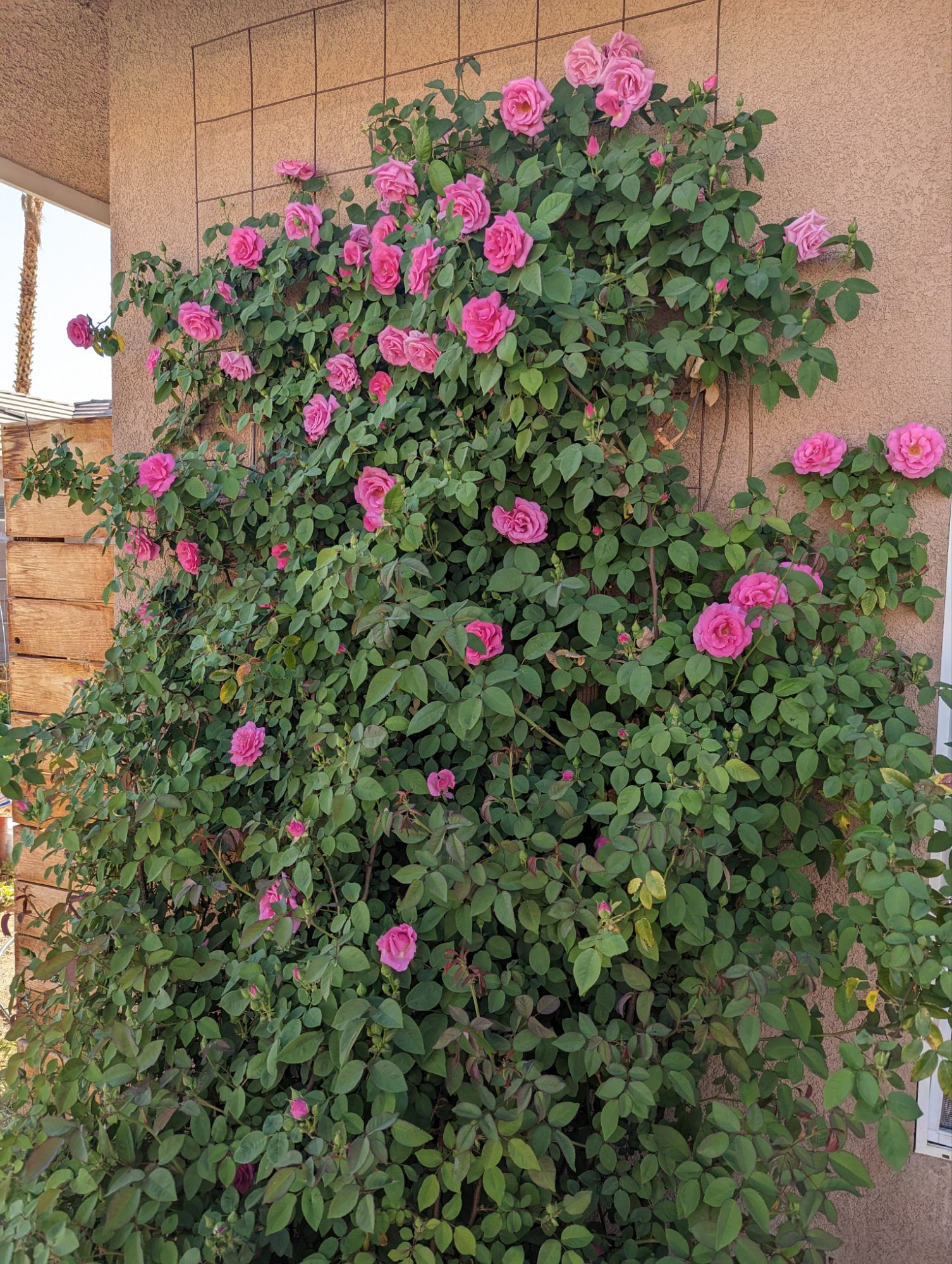
I’ve Been Quiet, But the Garden Hasn’t Stopped
I haven’t written here since last October, but the garden never really stopped growing — even when life got loud, dusty, and a little chaotic.
Since then, there’s been a front yard transformation, a winter full of wildflowers, construction dust blowing through the backyard, and countless late nights spent redesigning and expanding the High Desert Garden Planner behind the scenes. Somewhere in the middle of all of it, I stopped writing here.
But I never stopped gardening.
The truth is, this season of life doesn’t look polished. Parts of my backyard are torn apart for a house addition. Some garden beds are thriving while others are waiting to be rebuilt. The weeds and the wildflowers have both had their moment. And honestly? That feels strangely fitting.
Because gardens aren’t static. They shift with the seasons we’re living through.
This year’s garden may not be the fullest or most photogenic one I’ve ever grown, but it might end up being the most realistic. And after months away, that feels like the right place to begin again.
The Front Yard Transformation
Last summer became one of the biggest transformation seasons my front yard has ever had.
What started as a hot, xeriscaped, high-desert space slowly turned into something softer, fuller, and alive. I spent months removing river rock, weeding out bermuda grass, reshaping beds, and planting through triple-digit heat. Some parts worked immediately. Other parts taught me patience the hard way.
If you followed along with my progress reels last year, you probably remember how experimental a lot of it felt. I was testing plants, reworking layouts, and learning how to balance structure with that slightly wild, cottage-style desert look I love so much.
Now, almost a year later, the garden finally feels like it’s settling into itself.
The plants are fuller. The pathways feel intentional. Pollinators have completely claimed the space. And for the first time, I can walk through the front yard and see layers instead of just landscaping.
One of the biggest lessons I learned through the process is that desert gardens don’t transform overnight. They evolve slowly, season by season, root by root. Looking back at where the yard started makes me appreciate every small step so much more.
Letting the Wildflowers Take Over
This season started with something simple: bare garden beds and a decision that felt both practical and a little experimental.
Instead of filling every space with structured plantings right away, I scattered wildflower seeds and stepped back. I wanted something different this year — a softer, more cottage-inspired desert garden that didn’t require constant upkeep or control. Less maintenance, more movement. Less planning, more possibility.
Then winter did what winter does best in the high desert — it surprised me.
We had several generous rain storms, the kind that don’t come often but change everything when they do. The seeds responded in a way I couldn’t have fully planned for. What looked like empty soil slowly turned into life unfolding in layers I didn’t expect.
And this spring, I was rewarded with something I can only describe as effortless beauty.
Soft, wispy flower beds. Gentle color scattered through the landscape. A kind of natural layering that feels more like a painting than a planting plan. Nothing overly structured, nothing forced — just movement, texture, and a quiet kind of abundance.
It reminded me that sometimes the best garden designs don’t come from adding more. They come from allowing space, trusting timing, and letting the desert show you what it wants to grow.


The Backyard in Transition
At the same time the wildflowers were exploding into bloom, our backyard turned into a construction zone.
We’re currently in the middle of a house addition, which meant parts of the garden I had spent years building had to be pulled apart almost overnight. Raised beds were moved. Plants were relocated wherever I could temporarily save them. Some things survived the transition beautifully. Most didn’t.
And if I’m honest, it’s been a little heartbreaking.
Gardeners understand this particular kind of attachment — the way a space becomes tied to routines, memories, and seasons of your life. So dismantling parts of the backyard felt less like “remodel prep” and more like undoing years of work with a shovel in my hand.
This summer’s garden will probably look different than the lush backyard I originally imagined sharing online. There are unfinished corners, construction materials, temporary fixes, and areas that simply need time to recover.
But maybe that’s part of gardening too.
Not every season is a peak bloom season. Some seasons are rebuilding seasons. Some are survival seasons. Some are just about keeping a few things alive while life shifts around you.
Right now, my backyard is becoming something new — even if it looks a little chaotic in the middle of the process.
What I’ve Been Building Behind the Scenes
Even in the middle of all of that change, I didn’t stop creating.
This winter, I quietly kept working on the High Desert Garden Planner — refining it, expanding it, and reshaping it based on everything I’ve actually lived through in my own garden over the past year.
What started as a simple planning tool has grown into something much more layered and practical. I added pages that reflect real high desert challenges — heat planning, water tracking, seasonal reset pages, and more flexible layouts for gardens that don’t always follow a perfect schedule. Because let’s be honest: desert gardening rarely does.
Every update came from something I needed myself while standing in my own yard wondering what to do next.
That’s what I love most about it now. It’s not just a planner built from theory — it’s built from trial, error, loss, surprise blooms, and those small wins that keep you going when the weather feels unforgiving.
Working on it during the quiet winter months also gave me a sense of continuity. Even when the backyard was torn up and the garden felt unstable, I still had something growing — just in a different way.
And now it feels ready to share again, with all the lessons this past season has taught me built right into its pages.
What This Season Looks Like Now
So this is where things stand right now.
The garden is in transition — part thriving, part rebuilding, part completely uncertain. The front yard is settling into its new rhythm, wildflowers are still doing their unexpected magic, and the backyard is somewhere between demolition and future possibility.
It’s not the version of a garden I would have planned at the start of the year. But it is the version that exists.
And I’m learning to meet it there.
This season will probably be more about observation than perfection. More about documenting what is growing than forcing what isn’t ready yet. I’ll be sharing the messy in-between moments, the small wins, the surprises, and the rebuild in real time.
Because if there’s one thing this year has made clear, it’s that gardens don’t pause when life gets complicated — they just change shape with it.
And honestly, I think there’s something worth paying attention to in that.
Where FireBloom Gardens Is Going Next
And that’s also how FireBloom Gardens is evolving.
This space has always been about more than just plants. It’s about learning how to grow something meaningful in a climate that doesn’t always make it easy. It’s about adapting, experimenting, and finding beauty in conditions that often ask you to do more with less.
This next chapter will reflect that even more clearly.
You’ll see more real-time garden updates, more honest “this is what worked and what didn’t” moments, and more focus on what it actually looks like to garden through heat, disruption, and change. Not just the highlight reel — the full process.
I also want to start connecting the dots between what I’m building here and what I’ve been creating behind the scenes with the planner. The tools, the lessons, the layouts — they all come from the same place: real desert gardening experience.
If you’ve been here since the early posts, thank you for sticking around through the quiet seasons. And if you’re just finding this space now, you’re stepping into a garden that is very much still in motion.
Either way, I’m glad you’re here for what comes next.