
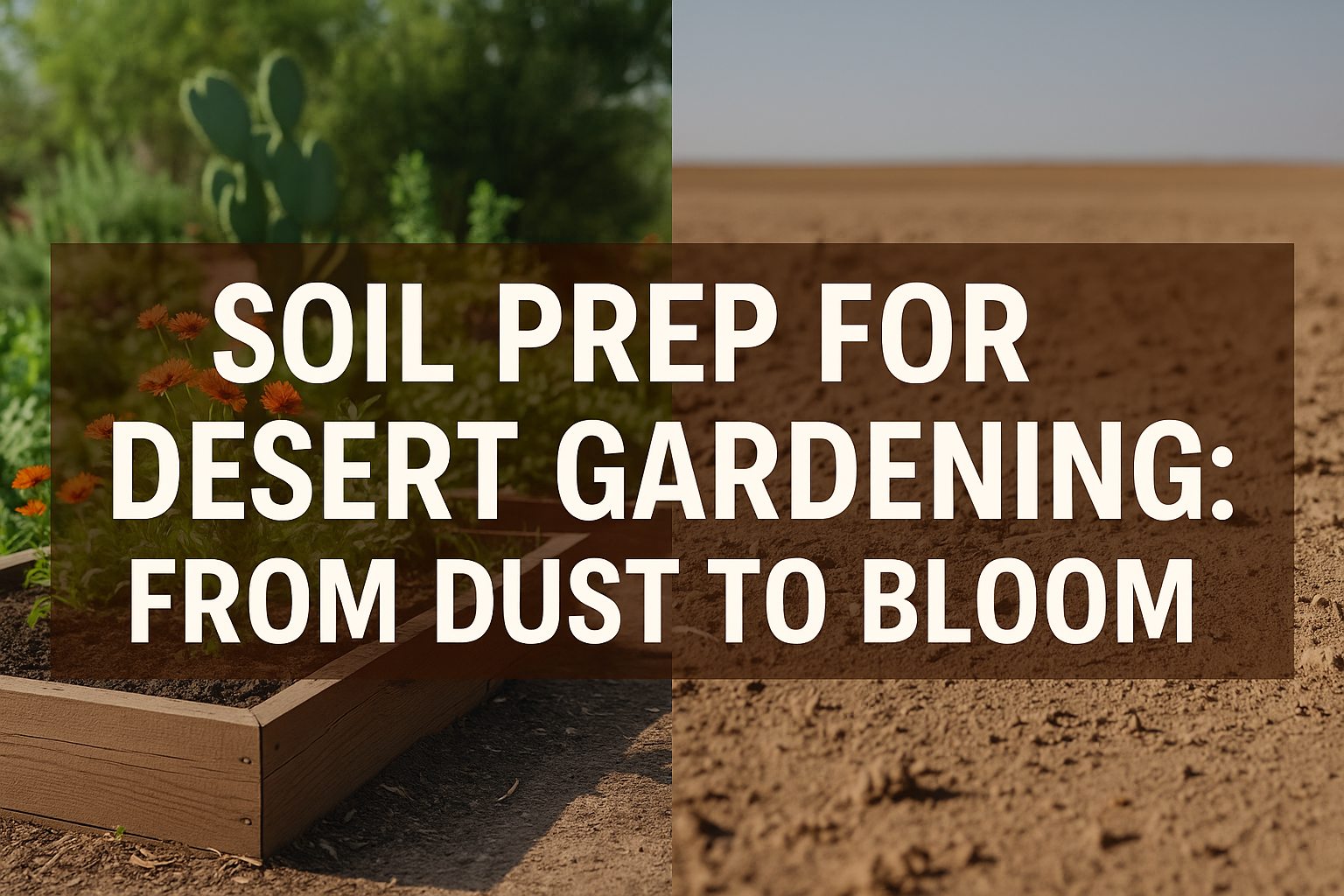
Trying to grow vegetables in desert soil? You’re not planting seeds—you’re negotiating with rock, salt, and stubborn sand.
If you’ve ever stood in your yard, shovel in hand, staring down a patch of sunbaked earth wondering how anything could grow here—you’re in the right place.
Desert gardening doesn’t begin with seeds. It starts beneath them—with soil that’s dry, alkaline, and often lifeless. But the good news? You can transform it. With the right amendments and a bit of know-how, even the dustiest patch can become fertile ground.
This guide is your roadmap to amending high desert soil:
- How to test it
- How to lower that sky-high pH
- What organic matter actually works
- And how to keep your soil healthy season after season
Because great gardens don’t start with luck. They start with prep.
Know What You’re Working With: Test First, Amend Later
Before you reach for the compost or dig in a raised bed, pause. Because in the desert, guessing what’s in your soil is like cooking without knowing the difference between salt and sugar.
Most high desert soils are alkaline, sandy, and severely lacking in organic matter. That combination means water drains too fast, nutrients don’t stick around, and your plants end up confused, stunted—or dead.
So what’s the first move? Test it.
Why Soil Testing Matters
- pH levels control everything. In alkaline soil (pH 7.5+), key nutrients like iron, phosphorus, and manganese get chemically “locked up,” making them unavailable to plants—no matter how much fertilizer you add.
- Texture tells you how it drains. Sandy loam drains too fast. Clay holds too tight. Testing helps you know what you’re up against.
Turn Down the Alkalinity: How to Lower Your Soil’s pH
High desert soil doesn’t just run dry—it runs alkaline, often clocking in with a pH between 7.5 and 9.0. That’s a problem, because most garden plants like their soil mildly acidic to neutral. At high pH levels, essential nutrients like iron, phosphorus, and manganese get chemically locked away, leaving your plants weak, yellowed, and nutrient-starved.
But don’t worry—this isn’t permanent. Here’s how to shift the chemistry in your favor.

Option A: Elemental Sulfur — The Slow & Steady Hero
What It Does:
Elemental sulfur oxidizes in the soil (with the help of microbes), gradually forming sulfuric acid. This lowers soil pH gently over weeks or months.
How to Apply:
- Mix 10–20 pounds per 1,000 square feet into the top 6–8 inches of soil.
- Best done in spring or fall, when soil temps are above 55°F.
- Re-test after 6 months to gauge results and avoid overcorrecting.
Why It Works:
Sulfur is the gold standard for long-term, controlled pH reduction. It’s safe, effective, and works with biology—not against it.
Think of it like composting your way to better chemistry—it takes time, but the payoff is real.
Option B: Iron & Aluminum Sulfates — The Quick Fixes
If you’re in a rush or dealing with visible iron chlorosis (those yellowing leaves), these are your fast-acting allies.
Iron Sulfate
- Works faster than sulfur and adds bioavailable iron—perfect for alkaline-induced deficiencies.
- Apply 1 pound per 100 square feet and water in well.
- Safe for most edible crops.
Aluminum Sulfate
- Drops pH quickly but is not recommended near edible plants due to aluminum uptake concerns.
- Use sparingly and only for ornamentals or non-edible beds.
Important: Fast fixes don’t last forever. Reapply as needed and consider pairing with organic matter for long-term balance.
Side Note: When Not to Lower pH
Some plants love it alkaline—like lavender, Russian sage, rosemary, and many native desert shrubs. If you’re growing acid-lovers like tomatoes, blueberries, or leafy greens, pH adjustment is critical. But for xeriscape natives? You might not need to touch it.
Feed the Soil: Organic Matter Is Everything
Once you’ve started adjusting your soil’s pH, the next move is to feed the biology beneath the surface. In desert gardening, organic matter isn’t just nice to have—it’s non-negotiable. It’s what turns dry, alkaline dust into soil that can hold moisture, support microbes, and sustain life.
Adding compost and other organic materials does more than improve structure. It also slowly acidifies the soil, increases nutrient availability, and keeps things cool under the relentless sun.

Compost: The Cornerstone of Healthy Desert Soil
Aged, well-decomposed compost is your best all-around amendment. It improves drainage in heavy clay and helps sandy soil hold water longer. It also brings microbial life back into sterile, lifeless ground.
- For new garden beds, mix compost directly into native soil—up to 50% of the total volume.
- For existing beds, add 1–2 inches of compost each season and gently work it into the top few inches of soil.
Other Organic Powerhouses
Want to go beyond compost? You’ve got options:
- Leaf mulch: Adds texture and breaks down quickly.
- Aged manure: Rich in nutrients, but make sure it’s well-aged to avoid burning plants.
- Peat moss: Helps acidify and retain moisture, especially in containers or raised beds.
- Pine needles: Naturally acidic and perfect as surface mulch around perennials or acid-loving plants.
Each of these materials contributes to a healthier soil ecosystem, which means stronger root systems, better water retention, and more resilient plants.
How Much Is Enough?
There’s no one-size-fits-all answer, but here’s the golden rule: Don’t skimp. Most desert soils are depleted, so you’re not just topping off—you’re rebuilding. Think of it like baking: you’re not sprinkling flour on top of a cake—you’re mixing the ingredients from scratch.
Aim for 2–3 inches of organic matter across the bed, then blend it into the top 6–8 inches of soil. Over time, the biology will do the rest.
Mix It Right: Why Blending Beats Dumping
So you’ve got your compost, maybe a little peat moss, even some pine needles on deck. Great. But here’s the mistake too many beginners make: dumping amendments on top and calling it good.
That might work in garden zones with rich loam and regular rainfall. In the desert? It just creates layers of disappointment.
Blending your amendments into the native soil is what transforms your ground from inhospitable to plant-ready. It’s about balance, structure, and giving your roots a runway to grow through—not a wall to hit.
Why the 50/50 Rule Matters
Desert soil needs support, but roots still need to learn how to navigate it. That’s why the 50/50 blend (half native soil, half organic matter) is the sweet spot.
- Too much compost can overload young plants with nutrients or retain too much moisture.
- Too little and you’re right back to compacted, alkaline soil that resists change.
Whether you’re planting in raised beds, containers, or directly in the ground, mix your amendments thoroughly into the top 6–8 inches of soil. You’re not just topping off a smoothie—you’re building the base.

The Magic of Mulch
After you mix, mulch. A 2–3 inch layer of organic mulch on top of your beds will:
- Help retain moisture (essential in dry climates)
- Suppress weeds
- Add more organic matter over time as it breaks down
Some of the best mulch options for desert beds include pine needles, straw, shredded bark, or even leaf mold. Bonus: they help slowly acidify the soil surface as they decompose.
Caution: Keep mulch an inch or two away from plant stems to prevent rot, especially in drip-irrigated beds.
Think of this process as prepping a layered cake: compost and amendments baked into the soil, mulch as the protective frosting. Done right, it’s not just good-looking—it’s functional and resilient.
Special Desert Soil Considerations
Even after you’ve tested, amended, and blended like a pro, there’s still one truth about high desert gardening: the environment doesn’t let up. Intense sun, fast-draining soil, and dry wind aren’t occasional problems—they’re daily reality.
If you want your garden to not just survive but thrive, you need to design with these conditions in mind. That means working with the climate, not against it.
Water Management: Don’t Let It Drain Away
Desert soil is like a sieve. Water goes in—and vanishes. If you’re not careful, even well-amended soil will dry out faster than your plants can drink.
Here’s how to manage it:
- Organic matter = moisture sponge. Every handful of compost or peat moss helps retain water longer. The more you add, the less you’ll need to irrigate.
- Go drip or go dry. Drip irrigation delivers water right to the roots, minimizes waste, and pairs perfectly with mulch.
- Ollas or buried clay pots can be a game-changer for deep, slow watering with almost no evaporation.
Water smart, not often. Your soil—and your water bill—will thank you.

Erosion Control: Stop Soil Loss Before It Starts
Sloped garden beds or exposed areas are especially vulnerable to wind and water erosion, both common in high desert zones. But there are simple ways to keep your hard-earned soil in place:
- Use groundcovers like creeping thyme, clover, or native grasses to anchor the topsoil.
- Mulch everything—bare soil is an invitation for wind to strip it bare.
Think of erosion control as protecting your investment. You’ve amended that soil—now make sure it stays where it belongs.
Keep It Going: Soil Health Is Maintenance, Not a One-Time Fix
Here’s the thing most gardening guides skip over: healthy soil isn’t a project you finish—it’s a relationship you build. One season of amending and composting won’t undo decades of compacted, alkaline, nutrient-poor desert dirt. But consistency? That’s where the real magic happens.
Your soil changes slowly, and that’s okay. The key is to stay in rhythm with it—testing, adjusting, and feeding it over time.
Monitor Your pH
Soil chemistry isn’t static. As compost breaks down or sulfur reacts, pH will shift—and you need to keep tabs.
- Re-test your soil annually, especially before each major growing season.
- Track your results and amendments in a garden journal. (Trust us, future-you will thank you.)
If your soil is still above 7.5 after a season of work, don’t panic. It often takes multiple applications of sulfur or organic matter to make lasting change.
Repeat + Reinforce
Lowering pH and building organic content is a gradual process. Most desert gardeners apply:
- Compost every season
- Sulfur every 6–12 months, depending on results
- Mulch continuously to protect topsoil and feed microbes
If you’re starting from scratch, aim to do a big amendment push in year one, then shift into maintenance mode.
Or—Plant for the Soil You’ve Got
If your soil is stubborn, you don’t have to fight it. Instead, choose plants that love high pH and thrive in desert conditions. These include:
- Lavender
- Russian sage
- Rosemary
- Apache plume
- Native grasses and shrubs
You’re not “settling.” You’re being strategic—and your garden will thank you by surviving the summer without a meltdown.
Because here’s the truth: desert gardening is less about perfection and more about alignment. When you work with the soil instead of trying to conquer it, everything changes.
Resources for Further Reading
Ready to go deeper? Whether you want to nerd out on soil chemistry or explore organic techniques specific to the desert, these trusted sources offer real value—no fluff, no filler.
- High Desert Landscaping Guide – San Bernardino County
A region-specific deep dive into water-smart landscaping, soil types, and plant selection. - Star Nursery: Improving Desert Soils
Straightforward advice from a desert-focused nursery with decades of on-the-ground experience. - Southwest Victory Gardens: How to Improve Desert Soils
A practical gardener’s guide to composting, amending, and building healthy soil in hot climates. - Kellogg Garden: Making Soil More Acidic Organically
Great for understanding how organic materials like pine needles and peat moss impact pH. - Farmstand App: Best Soil Amendments for Adjusting pH
Simple breakdowns of sulfur, iron, and other soil amendments with pros and cons. - Cornell Cooperative Extension: Correcting Soil pH
A science-backed explainer on how pH correction actually works and why it matters.
Final Thoughts: Let’s Bring It to Bloom
Desert soil may start out harsh, dry, and uninviting—but that doesn’t mean your garden has to be. With smart testing, steady amendment, and a rhythm of seasonal care, you can turn dust into bloom—and not just once, but season after season.
Whether you’re planting herbs, flowers, or a full backyard food forest, your success starts with what’s under your feet. And now you know exactly how to prep it right.
Next steps:
- Follow us on Instagram @firebloomgardens for weekly desert gardening tips, reels, and seasonal guides
- Leave a comment: What’s the toughest soil challenge in your garden?
Because your soil isn’t just where your plants grow—it’s where your entire desert gardening story begins.
See you in the dirt.
— FireBloom Gardens